
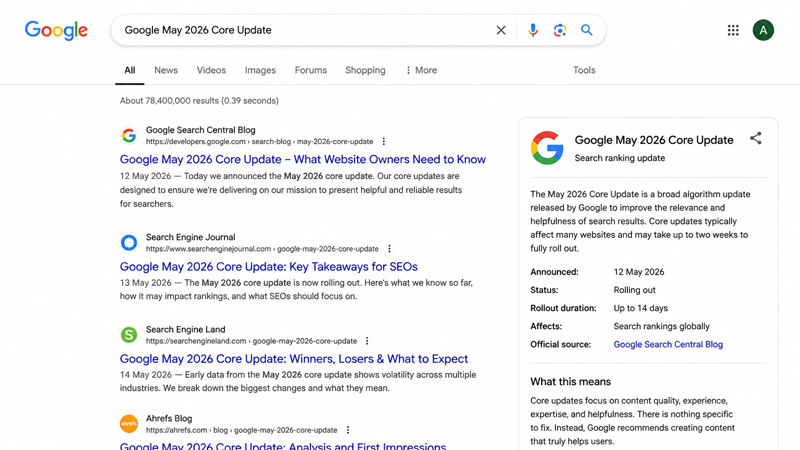
Google launched its May 2026 Core Update on 21 May and it has now finished rolling out. For many small business websites, rankings shifted noticeably during this period. If your traffic dropped — or increased — this update is likely the reason. Here's what changed, who was affected, and what you should do next.
What Is a Core Update?
Google releases core updates several times a year. Unlike smaller changes that target specific issues such as spam or page experience, core updates are broad changes to how Google evaluates and ranks content across the entire web. They don't penalise specific sites — they reassess the relative quality and relevance of pages across all search results.
The result is that some sites rise and others fall, even if nothing on the site has changed. The update reflects a shift in what Google now considers most valuable to its users.
What Changed in May 2026?
The May 2026 update continued Google's push toward stronger technical SEO, clearer content signals and more trustworthy brand authority. Several key themes emerged:
- Sites with thin or generic content saw significant ranking drops
- Pages with clear expertise, authority and trust signals performed better
- Technical performance — particularly mobile speed — remained a strong ranking factor
- Informational pages without strong conversion paths lost visibility
- Local businesses with clean, consistent structured data held or improved their positions
Who Was Most Affected?
Websites relying heavily on basic informational content without genuine depth or expertise saw the biggest drops. Sites with slow load times, poor mobile performance or inconsistent business information also took hits. On the positive side, well-structured local business sites with genuine reviews, clear service pages and fast performance held their rankings or improved.
What Should Small Businesses Do?
Before making major changes, give your site a few weeks to settle. Core updates take time to fully roll out and rankings can fluctuate during the process. Once things stabilise, focus on:
Improve Content Quality
Google wants pages that genuinely help users. Review your key service and landing pages — are they specific, useful and written with real expertise? Generic content copied from competitors or padded out with filler text is exactly what this update targets.
Fix Technical Issues
Run your site through Google PageSpeed Insights and address any critical issues. Slow mobile performance, broken links and missing metadata all drag rankings down. Every site we build targets 85+ on PageSpeed as standard — this is why it matters.
Check Your Structured Data
Schema markup helps Google understand your business, your services and your location. If your structured data is missing or incorrect, you're making it harder for Google to rank you for the right searches. We include schema setup on every site we build and manage.
Build Genuine Authority
Reviews, backlinks from reputable local sites and consistent business information across the web all help build the trust signals Google looks for. Make sure your Google Business Profile is complete, accurate and regularly updated.
The Bigger Picture
The May 2026 update is part of a longer trend. Google is getting better at identifying genuine expertise and rewarding businesses that invest in their online presence properly. Shortcuts, thin content and slow websites are becoming increasingly difficult to sustain in search results.
For small businesses, this is actually good news. A well-built, properly optimised site with real content and genuine reviews will consistently outperform a flashy but poorly constructed one — regardless of budget.
Run a free audit and get your Google PageSpeed scores, SEO rating and a full performance breakdown in under a minute.